The Korean Age System: Why Locals Ask Your Age and How to Navigate It
Stepping off the plane in Seoul, one of the first personal questions you will be asked by a new friend is your age. The Korean Age System is much more than a number; it is the invisible blueprint defining every social interaction in the country. It dictates how you speak, how you drink, and how you show respect.
Understanding this cultural framework transforms your experience from feeling like a confused outsider to an informed participant. Here is how the social mapping works on the ground.
Understanding the Korean Age System: The 2023 Legal Shift
On June 28, 2023, the Ministry of Government Legislation (법제처) officially transitioned the nation to the International Age (만나이) standard for legal and administrative purposes. Before this, babies were considered one year old at birth and universally gained a year on January 1st.
Legally, the country aligned with the rest of the world. Socially, the streets operate differently.
Locals still heavily rely on their traditional “Korean age” and birth years to establish social hierarchy. Why? Because the entire culture of friendship relies on shared birth cohorts. If you share a birth year, you are equals (친구). If you do not, a hierarchy must be established immediately to know which linguistic tier of Korean to use.
Instead of stating a numerical age, locals frequently ask for a birth year to avoid confusion with the legal system change. If you were born in 1992, you are a “92-er” (구이년생). This instantly establishes your social rank without doing the math.
The Age Interrogation: Building the Social Map
“How old are you?” is not a rude or invasive question in South Korea. It is a necessary social mapping tool.
Without knowing your age, a Korean person literally does not know how to speak to you. The Korean language is strictly divided by hierarchy. Speaking to someone older requires Honorifics (존댓말), while speaking to a younger friend allows for Casual speech (반말).

This hierarchy extends far beyond vocabulary and straight into body language. Imagine looking up a popular barbecue restaurant on Naver Map (네이버 지도) and sitting down for a meal with new acquaintances. The age conversation that happens within the first five minutes dictates the entire casual dinner sequence. It determines exactly who pours the drinks first. The youngest at the table always pours for the oldest using two hands, turns their head away when taking a shot of soju, and waits for the elders to eat first.
Using ‘Banmal’ (casual speech) to a shopkeeper, waiter, or taxi driver just because they seem friendly or younger than you is a mistake. Always default to Honorifics (존댓말) with strangers and service staff. When interacting with staff at busy terminals, using basic honorifics helps—see our travel-explore for more communication tips.
The Title Hierarchy: Navigating the Names
Once the Korean Age System establishes the ranking, names are often replaced entirely by familial titles. Using a slightly older person’s given name is considered highly disrespectful. Instead, you adopt these titles based on your gender and the older person’s gender:
- Unnie (언니): Used by a female to an older female.
- Noona (누나): Used by a male to an older female.
- Hyung (형): Used by a male to an older male.
- Oppa (오빠): Used by a female to an older male.
These aren’t just words; they are verbal contracts of closeness and respect. Calling someone “Hyung” implies you acknowledge their seniority, and in return, they shoulder the responsibility of taking care of you—which often includes paying for dinner.
Only switch to casual speech after the older person explicitly says, “let’s speak comfortably” (말 편하게 하자). Never initiate this shift if you are the younger party in the dynamic.
The Foreigner Exception
South Koreans do not expect travelers to flawlessly execute the Korean Age System. There is a built-in “foreigner exception” where locals are highly lenient with cultural blunders, awkward bowing, or accidental casual speech.
However, leniency is not the same as respect.
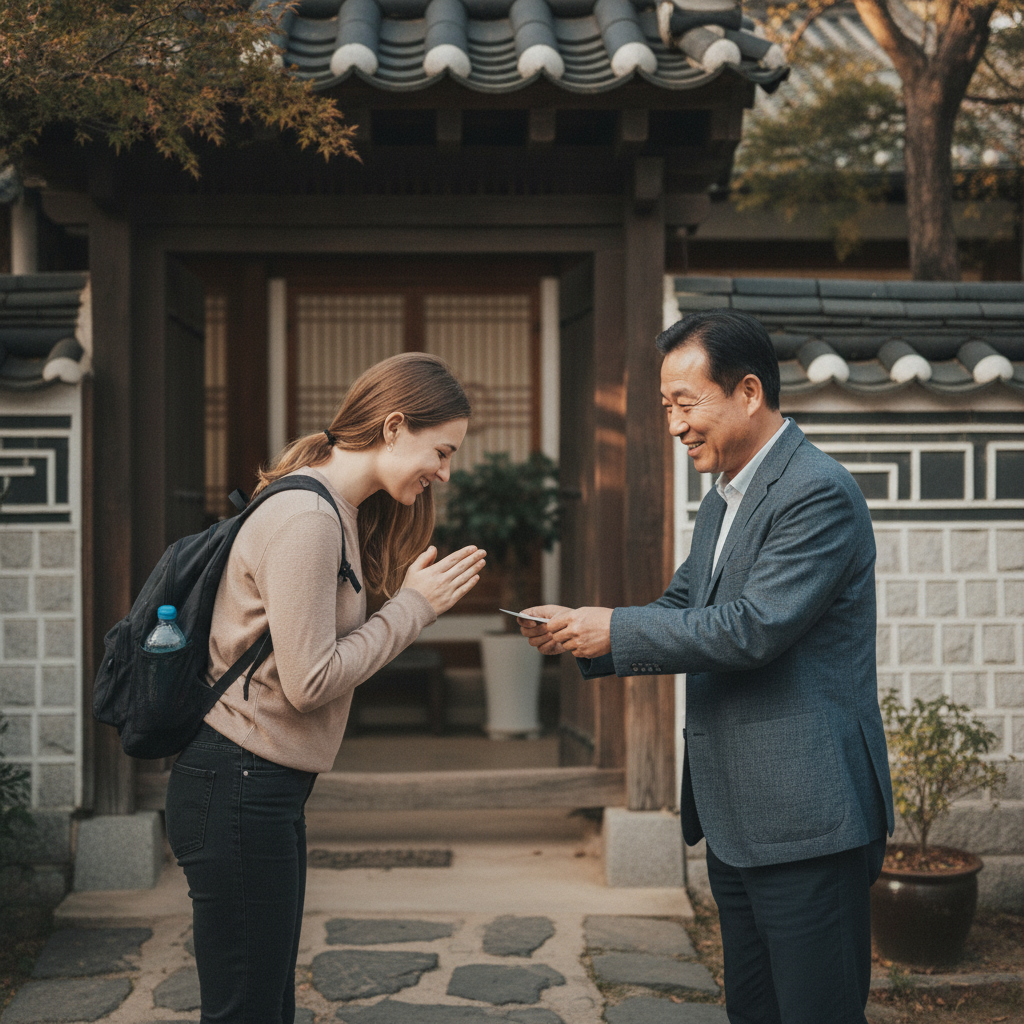
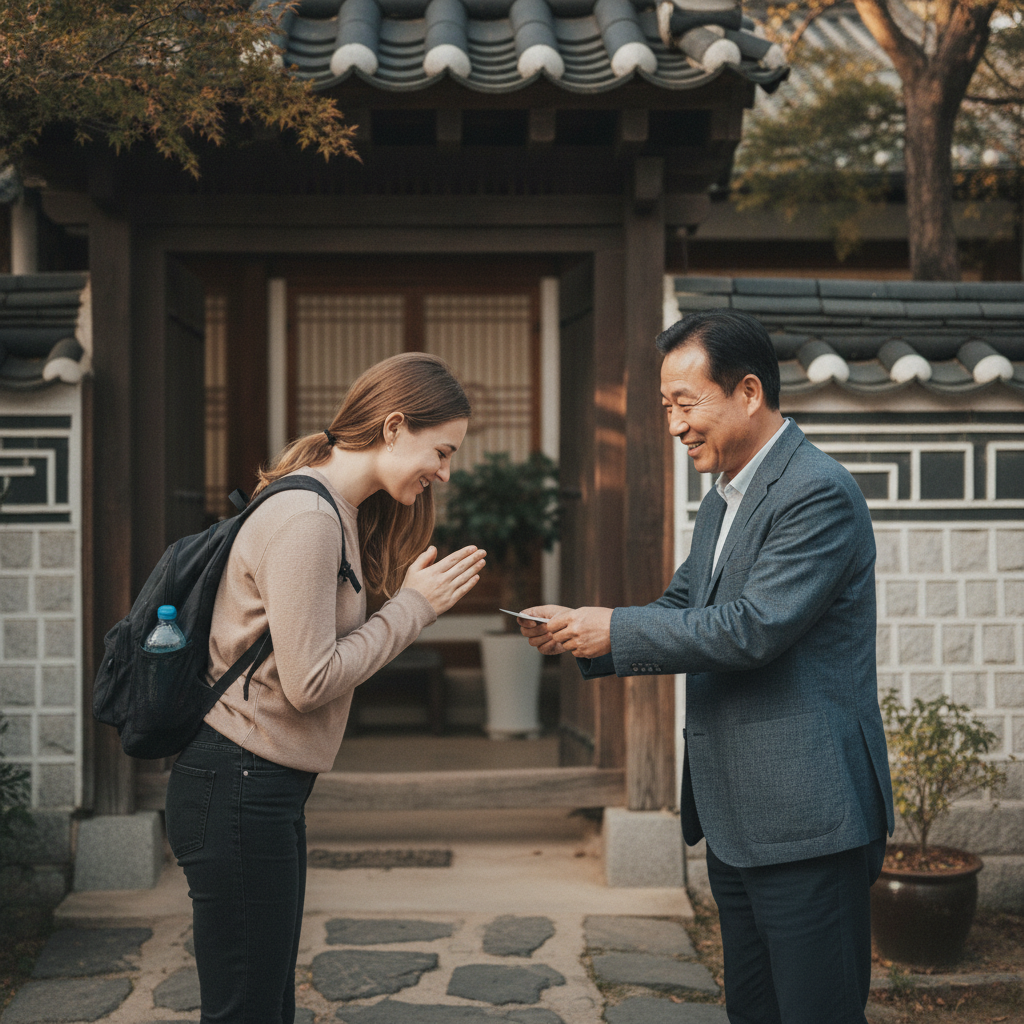
Foreigners who make the effort to understand the birth-year hierarchy, use two hands when receiving a business card, and correctly deploy titles like “Unnie” or “Hyung” instantly break the ice. It signals deep respect for the culture, opening doors to genuine local friendships and invitations to private gatherings that most tourists never see.
Understanding the hierarchy is just the start; for more deep dives into local life, visit our Culture & Entertainment hub. Mastering these subtle social cues will fundamentally change how you experience the peninsula.