Garbage Disposal Korea: The Ultimate Insider’s Guide to Sorting Like a Local
Mastering Garbage Disposal Korea is an essential rite of passage for any expat wanting to avoid hefty fines and angry neighbors. Navigating the color-coded bags and strict sorting rules might seem daunting at first, but with a bit of local know-how, it becomes second nature. If you’re just visiting, see our Travel & Transportation tips for handling waste on the go. For residents, this guide breaks down exactly how to sort, bag, and toss your trash like a seasoned local.
In This Guide:
Demystifying Garbage Disposal Korea: The Jongnyangje (종량제) System
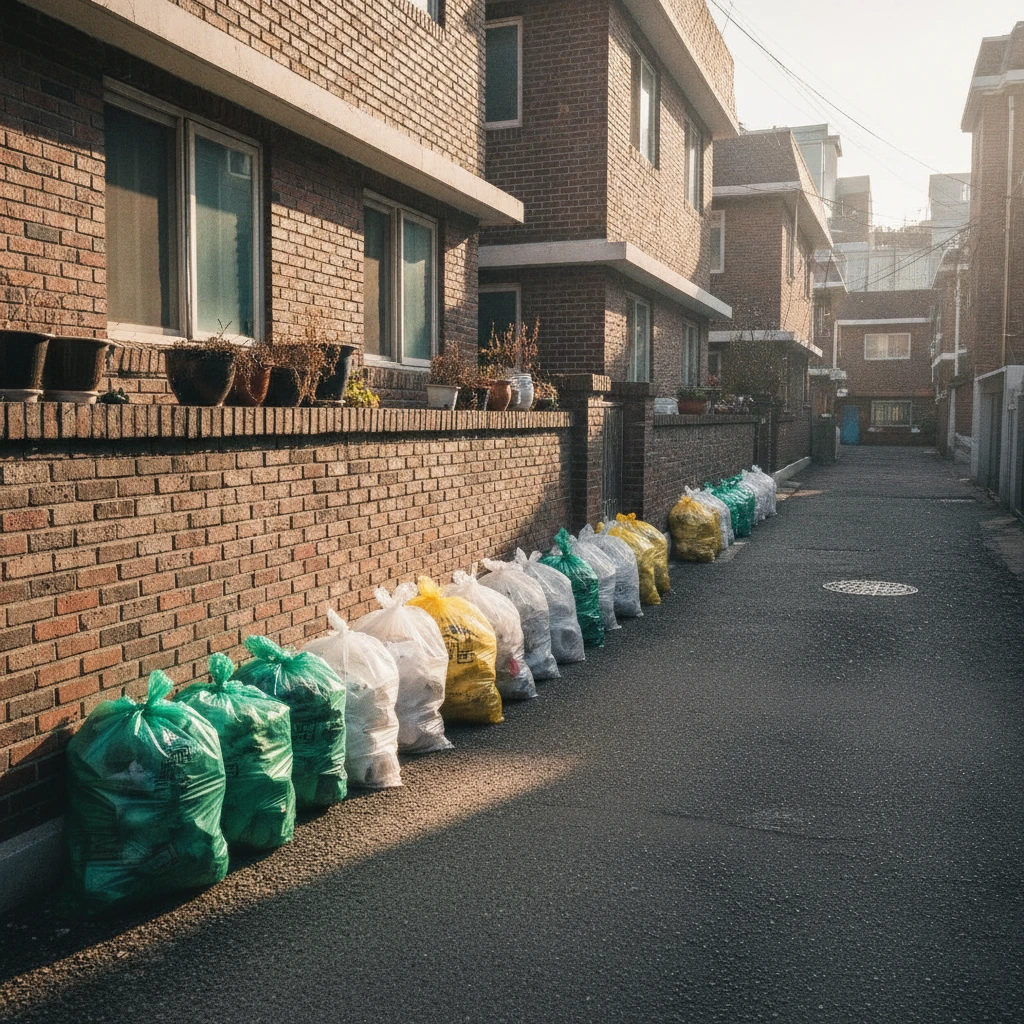
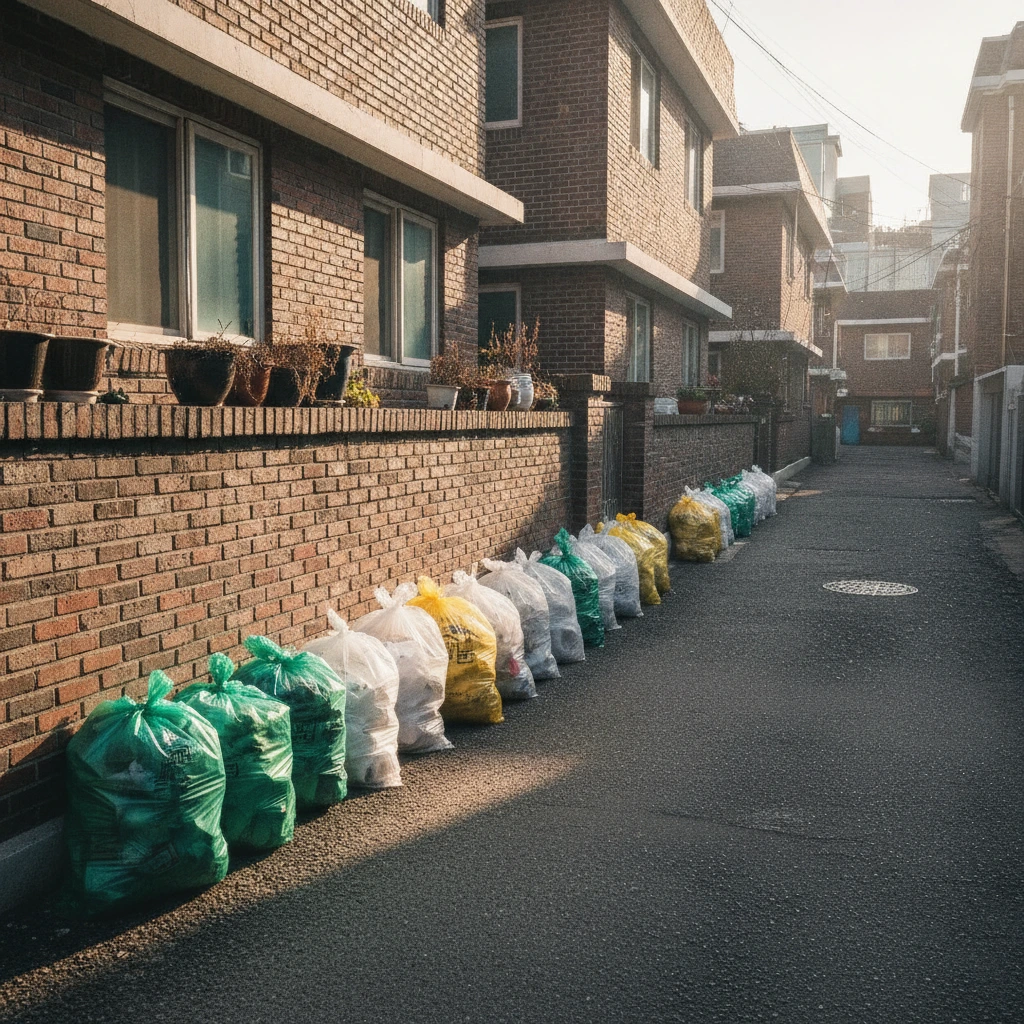
Trash is not free in this country. Since 1995, South Korea has operated on the Jongnyangje (종량제) system, a volume-based waste fee policy designed to minimize garbage and maximize recycling. You must purchase designated plastic bags from a Convenience Store (편의점) or supermarket to throw away your waste.
The biggest catch with Garbage Disposal Korea is that these bags are district-specific. A standard bag purchased in Mapo-gu (마포구) cannot be used in Yongsan-gu (용산구). If you attempt to cross district lines with your trash, sanitation workers will refuse to collect it, and you will face a steep fine.
Relocating across Seoul requires a quick administrative hack. When moving to a new district, visit your new local Community Service Center (주민센터). Request a sheet of “certification stickers.” Slap one of these official stickers onto your leftover old bags, and you are legally allowed to use them in your new neighborhood until you run out.
General Waste (일반쓰레기) vs. Food Waste (음식물 쓰레기)
The golden rule of food waste is simple: if an animal can eat it, it goes in the food bag. Food Waste (음식물 쓰레기) requires specific yellow or blue bags, depending on your district, while General Waste (일반쓰레기) goes into the standard white or green bags.
If you live in a large apartment complex (단지), you might never buy a food waste bag. These buildings utilize a high-tech RFID card system. You simply tap your designated keycard to unlock a communal food waste bin. The machine weighs your deposit and automatically bills the exact amount to your monthly apartment maintenance fee.
Mixing chicken bones into yellow food bags or buying the wrong district’s bags at CU will lead to uncollected trash and heavy fines. Sanitation workers regularly rip open untagged bags to find mail or receipts linking the illegal trash back to your address.
Recycling (재활용) & Delivery Culture
Scrubbing your delivery containers is non-negotiable. South Korea’s robust delivery culture leaves residents with mountains of plastic containers. To master Garbage Disposal Korea, you must thoroughly wash out all food residue before recycling.
Red pepper oil (고춧가루) stains are particularly stubborn. If a plastic container remains stained orange even after a scrub with dish soap, it officially becomes General Waste (일반쓰레기). Do not put it in the recycling bin.

For residents living in multi-family housing or ‘villas’ without a dedicated 24-hour basement facility, timing is everything. Many villas and standalone houses strictly mandate trash disposal only between 6 PM and 11 PM on specific days. Putting your garbage bags out on a Friday morning before heading to work is a classic “fine trap.” Always use Naver Map (네이버 지도) to locate nearby drop-off zones if you missed your villa’s designated window.
Many Koreans excel at upcycling before recycling, saving clean delivery containers to use as drawer organizers. Locals also meticulously check the neighborhood “garbage corner” schedule posted by their building manager to ensure they never miss the pickup window.
Bulky Waste & Furniture (가구/대형폐기물)
Ditching that broken mattress requires a digital or physical paper trail. You cannot simply drag a damaged bookshelf to the curb. Disposing of bulky furniture (가구/대형폐기물) demands an official fee. Tech-savvy expats managing their Garbage Disposal Korea duties rely on dedicated smartphone apps to handle this seamlessly.
Download Ppaegi (빼기) or Yeogiro (여기로). You snap a photo of the item, pay the small fee (usually between 2,000 to 15,000 KRW) via mobile payment, and receive a reservation number to tape to the furniture before hauling it outside.
If you prefer an offline approach, head to your local Community Service Center (주민센터). Tell the clerk what you are throwing away, pay the fee in cash or card, and they will hand you a physical sticker to affix to your bulky item. For a deeper dive into settling in and navigating neighborhood bureaucracy, read our Living & Healthcare guide.
Trash disposal is usually Sunday through Thursday nights after 6 PM. Avoid taking trash out on Friday or Saturday nights, as sanitation crews generally do not operate over the weekend in residential neighborhoods.
About The Korea Hub
Your go-to resource for navigating life in South Korea. From bureaucratic hurdles to the best local delivery spots, we provide the insights you need to live like a local.