The Insider’s Guide to Korea’s Immersive History: DMZ, Hanoks, and Temple Stays
South Korea is infinitely more than just slick K-pop choreography and neon-drenched megacities. True cultural immersion means stepping past the sanitized tourist traps and knowing the hidden rules of the peninsula.
The DMZ Tour: Strategy Over Spectacle
Visiting the heavily fortified border is a non-negotiable historical pilgrimage, but doing it wrong will ruin your day. If you arrive at the Imjingak (임진각) ticket booth after 8:30 AM on a weekend, prepare for a punishing three-hour wait, or worse, a complete sell-out for the famous Third Tunnel (제3땅굴).
To avoid the chaos, book a DMZ tour Seoul English guide that strictly advertises “No Shopping.” Cheap tour operators routinely waste two hours of your life trapping you in mandatory ginseng factories. Pay the premium. Seek out itineraries that feature a North Korean defector (탈북민) Q&A session. Hearing their lived reality rewires your entire understanding of the border.
Navigating these restricted military zones requires precise logistical planning. Before booking, review the latest transport regulations in our Travel & Transportation guide to ensure a seamless departure from Seoul.
Do not bring a digital copy of your passport—military checkpoints require the physical document (여권) for entry. Additionally, if your tour includes the Joint Security Area (JSA), respect the strict military dress code. Ripped jeans, shorts, and camouflage clothing will get you denied at the gate.
Securing Your Hanok Stay Bukchon: Surviving the Curfew
Booking a Hanok stay Bukchon is no longer just about snapping aesthetic architectural photos; it is a tactical advantage.
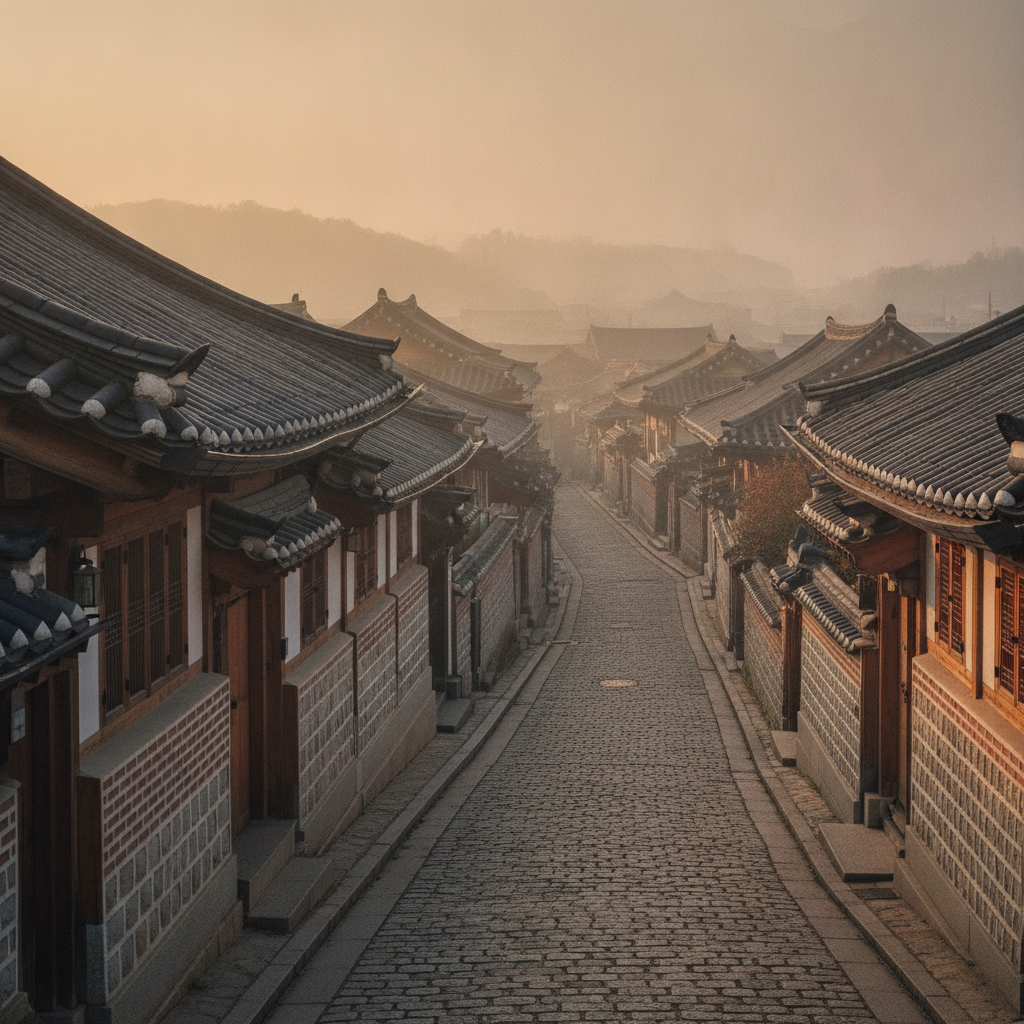
In response to severe overtourism, the 2025 Bukchon Curfew strictly bans non-resident tourists from the village streets between 5:00 PM and 10:00 AM. However, registered Hanok stay (한옥 스테이) guests are legally exempt from this ban. This loophole is your exclusive ticket to wandering the lantern-lit alleys of Bukchon Village (북촌한옥마을) in absolute, haunting silence.
Inside your traditional Hanok (한옥), you will encounter the historic underfloor heating system, Ondol (온돌). When the boiler fires up, the floors radiate intense heat for hours. Do not make the rookie mistake of turning the system completely off if you start sweating. Instead, switch the thermostat to the “Away” (Oechul, 외출) mode to maintain a comfortable baseline temperature.
“The 2025 curfew has transformed Bukchon. Staying overnight is now the only way to experience the village as it was centuries ago—quiet, shadowed, and perfectly still.”
Ditch the endlessly crowded main tourist artery of Bukchon-ro 11-gil. Instead, venture into the much quieter Wonseo-dong (원서동) neighborhood running alongside the stone walls of Changdeokgung (창덕궁) to discover hidden local artisan workshops.
Mastering the Korean Temple Stay Experience
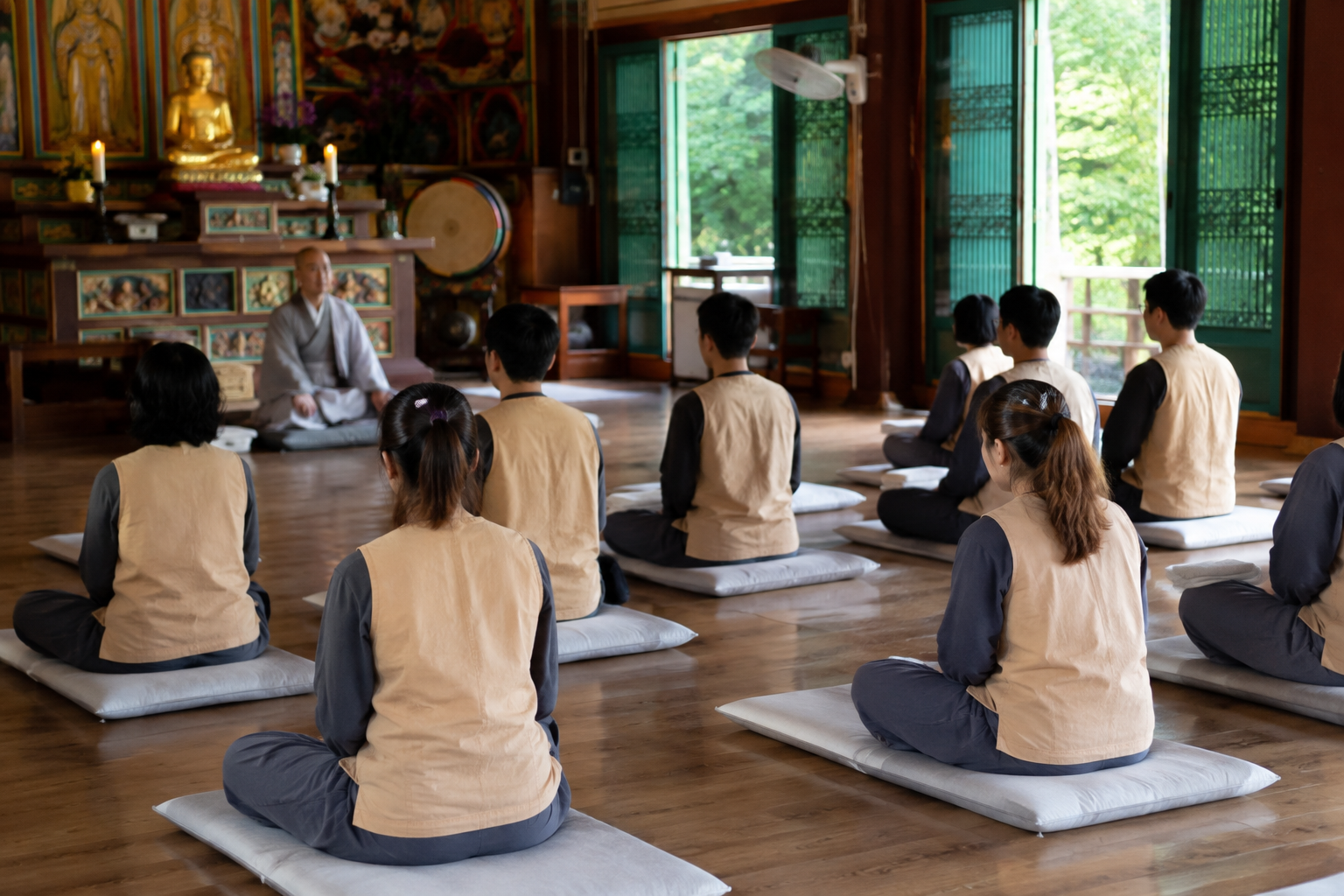
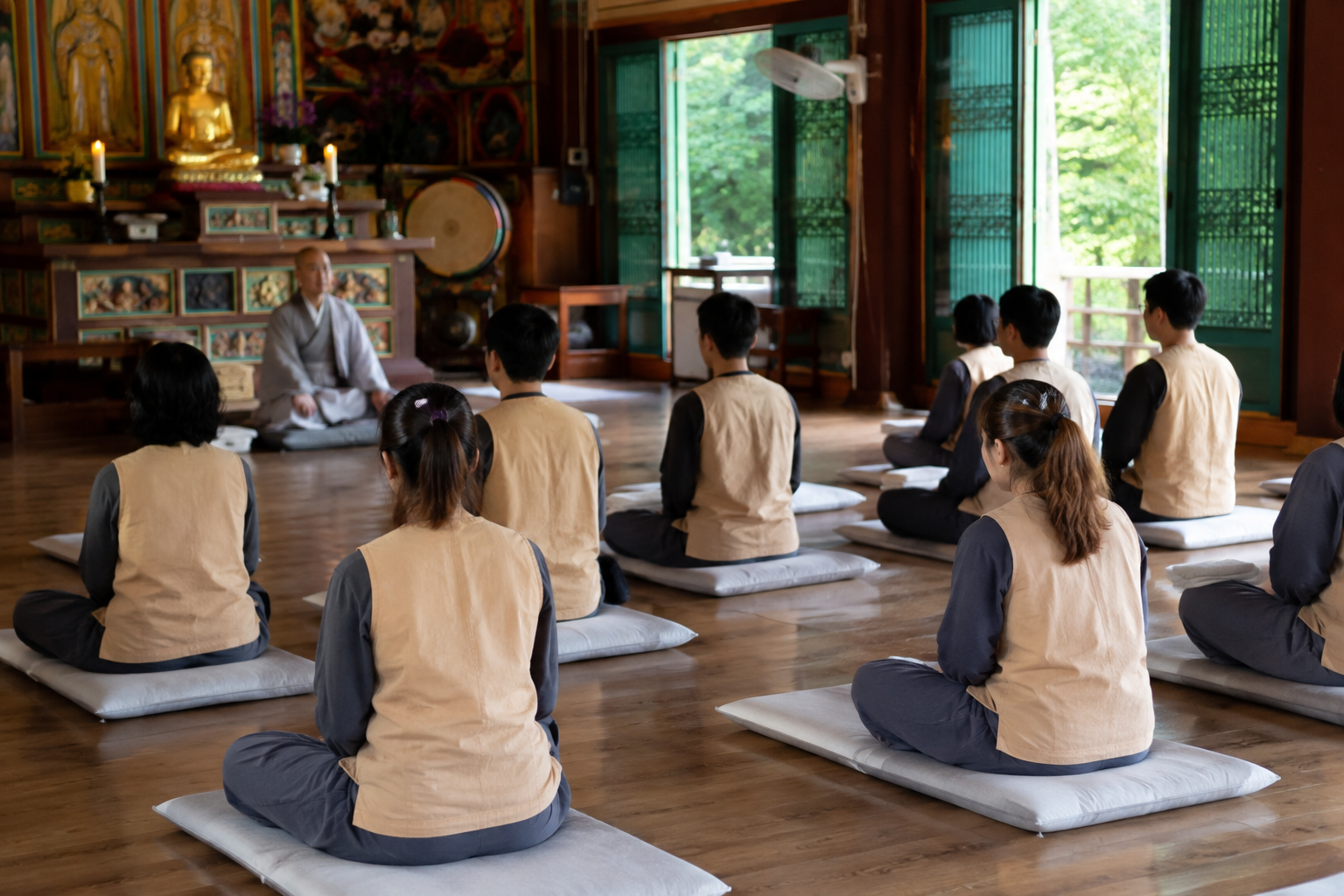
A Korean temple stay experience forces you to aggressively disconnect from the modern world.
When reserving a spot through the official Templestay (템플스테이) network, pay close attention to the itinerary type. You must consciously choose between a flexible “Rest-oriented” retreat or a rigorous “Experience-oriented” (참가형) schedule. The latter involves a mandatory 4:00 AM wake-up call for pre-dawn chimes and chanting ceremonies (Yebul, 예불). This early morning discipline is a massive culture shock for the unprepared.
Temple Etiquette and Unwritten Rules
Monastic etiquette is rigid, and foreigners are not exempt from the rules. Always enter the main prayer halls through the side doors. The central entrance is highly symbolic and strictly reserved for the monks (스님). For a deeper dive into decoding these unwritten religious and social customs, check our Culture & Entertainment guide.
Urban travelers short on time should book a night at Bongeunsa (봉은사), an ancient sanctuary sitting directly amidst the skyscrapers of Gangnam. Those seeking physical discipline must head to Golgulsa (골굴사) in Gyeongju to train in traditional Zen martial arts (Sunmudo, 선무도).
Book your temple stay in mid-April or early May. This perfectly aligns with the spectacular Lotus Lantern Festival (연등회) celebrating Buddha’s Birthday. The temples are draped in thousands of colorful paper lanterns, making the nighttime atmosphere absolutely electric.