
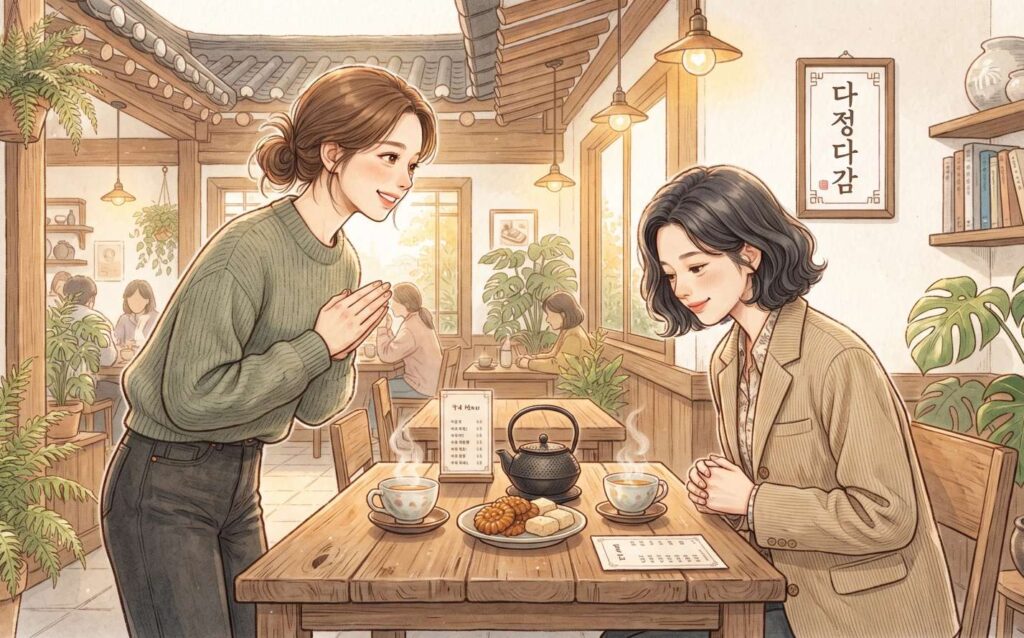
One of the first things learners notice about Korean is that the way you speak changes depending on who you’re talking to. There are different “speech levels,” and choosing the right one shows respect. It sounds complicated, but a simple rule gets you very far: when in doubt, use the polite -yo form.
The three levels that matter
- Formal polite (-습니다 / -ㅂ니다, “-seumnida / -mnida”). Used in news, presentations, customer service and formal meetings. Example: 감사합니다 (gamsahamnida, “Thank you”).
- Polite informal (-요, “-yo”). The everyday default with strangers, coworkers and anyone older. Example: 고마워요 (gomawoyo, “Thank you”).
- Casual (반말, banmal). Used with close friends, family and younger people. Example: 고마워 (gomawo, “Thanks”).
Same sentence, three levels
“Did you eat?”
- Formal: 식사하셨습니까? (siksa-hasyeotseumnikka?)
- Polite: 밥 먹었어요? (bap meogeosseoyo?)
- Casual: 밥 먹었어? (bap meogeosseo?)
Simple rules for beginners
- Start with -yo. It’s polite and always safe.
- Don’t switch to banmal on your own. Wait until the other person suggests it. A common phrase is “말 편하게 하세요” (mal pyeonhage haseyo, “Feel free to speak casually”).
- Age matters. Koreans may ask your age to choose how to speak to you. Korea moved to the international age system for official purposes in 2023, but socially, being older or younger by birth year still matters. Friends born in the same year are called 동갑 (donggap).
- Avoid “너” (you) with elders. Use the person’s name or title instead.
Names and titles
- -님 (nim): a respectful ending for titles, such as 선생님 (teacher) or 사장님 (boss or shop owner).
- -씨 (ssi): used after a full name, such as 김민수 씨. It’s fine for equals or younger people, but not for your boss.
- Oppa, unnie, hyung, noona: these are for people close to you who are older. Women call older men oppa and older women unnie, while men call older men hyung and older women noona. Don’t use them with strangers.
Honorific verbs
Some words change completely for respect:
- 먹다 (to eat) → 드시다
- 자다 (to sleep) → 주무시다
- 있다 (to be) → 계시다
- 주다 (to give) → 드리다 (when giving something to an elder)
Common mistakes
- Using banmal with someone you’ve just met.
- Saying “you” (너) instead of a name or title.
- Calling a waiter or shop staff “oppa” or “unnie.” Use 사장님 or 저기요 (“excuse me”) instead.
Which part of Korean politeness confuses you the most? Ask in the community.